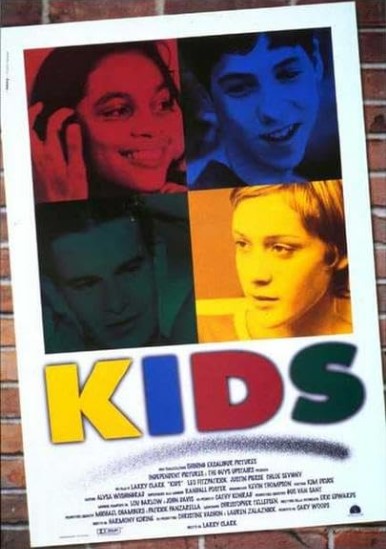
Recently, I have been watching a lot of films featuring child non-actors. After finishing City of God and Pixote, the controversial movie Kids was next on my list. I expected it to suck me in, but I didn’t anticipate the emotional drain I am feeling right now. Similar to those two (I already have their reviews—kindly check them out), I knew that these were new actors portraying a world only they can portray best. Kids is a movie rated 18+. Rightly so. It’s just that I don’t even know what to say. This movie will leave your emotions all over. I honestly don’t even know what to say. This film will leave your emotions completely scattered. It tackles first love, young love, heavy drugs, street life, virginity, HIV/AIDS, lost innocence, parenthood, rape, foul language, homophobia, violence, and underage sex. If you are a viewer who gets easily triggered, this is definitely not the film for you.
A Window into the Chaos: The Movie Summary, To understand the sheer weight of this film, you have to look at what actually happens over its brutal, condensed timeline. Written by a 19-year-old Harmony Korine and directed by Larry Clark, the movie unfolds over the course of a single, sweltering summer day in New York City.The plot centers on Telly (played by Leo Fitzpatrick), a deeply amoral, slick-talking 17-year-old skateboarder whose entire existence revolves around a disturbing, predatory obsession: deflowering young, unsuspecting virgin girls. Telly operates under the completely delusional and narcissistic myth that sleeping with virgins protects him from contracting HIV. Alongside his equally reckless and violent best friend Casper (played by Justin Pierce), Telly wanders through the city, drinking, stealing from local corner stores, doing drugs, and hunting down his next target.
The parallel storyline follows Jenny (Chloë Sevigny), one of Telly’s past sexual partners. After visiting a free clinic, Jenny is entirely blindsided by the news that she has tested positive for HIV, despite only ever having been with one person—Telly.Panic-stricken and devastated, the film transforms into a frantic, 24-hour race against time. Jenny wanders through the underbelly of Manhattan, desperately trying to track Telly down before he can sleep with and inevitably infect his next target, a completely oblivious pre-teen girl. The entire narrative hurtles toward an chaotic, drug-fueled house party where the lives of these completely unsupervised adolescents collide in absolute tragedy.
A Terrifying 24-Hour Look Inside 1990s New York The film is set in 1995 at the absolute peak of the HIV/AIDS epidemic in New York City. It was a time when accessible information about the disease was rare, stereotypes were rampant, and fear was everywhere. The director gives us a raw, fly-on-the-wall look into the chaotic lives of these skate kids. For those who lived through or are aware of New York history, it really begs the question: was it truly this bad? In my language, there is a traditional saying that translates to: a thief will steal every single day and never get caught, but you will get caught the very first day you try it. This proverb perfectly describes the tragedy of this movie.
We aren’t watching the story of someone fighting for their life in a hospital. Instead, Kids shows the harrowing mental breakdown of Jenny, played by Chloë Sevigny, after she receives her diagnosis. Honestly, I don’t think the reality of the situation has even fully hit her yet. All she knows in her panic is that she has to stop Telly. If you received that kind of news in the 90s, it would take you a full week to process the impact of a disease that was still heavily stigmatized and misunderstood. Yet here she is, infected at the very beginning of her life, and this poor girl is more worried about Telly’s next victim than her own survival.
The Frustration of Telly’s Character. To truly understand Telly, you have to watch the film for yourself. Telly is a broken, naive, stupid, and uninformed boy. He is the kind of character you desperately want to beat up, but also want to hug equally. He is so deeply misogynistic and completely uneducated about the world that he is intensely frustrating to watch.
I would have loved to see how these characters navigated life if Telly actually found out about his own HIV status. How would he have reacted? Who is ultimately to blame for the tragedy in this movie? Is it the government for failing to sensitize the public about a deadly new disease? Is it the parents who don’t supervise their children? Or is it peer pressure, dangerous friend groups, drugs, or life itself?
One element I absolutely loved was the opening contrast between how the girls discuss sex versus how the boys discuss it. You can see the universal truth that girls mature a little faster than boys. The girls at least stand a chance at life; they are aware enough of what is happening around them, even if they are still too naive and young to realize the lifelong impact of their choices.
That Polarizing Ending I know that many viewers were incredibly angry about how abruptly the movie ends. However, I think the ending makes perfect sense. In my opinion, the director made the right decision to give us such an abrupt finish because it highlights the vicious, unbroken circle of street life. If that makes sense.
Ultimately, this is a movie I don’t even know how to recommend, or if I should in good conscience recommend it at all. Unless you specifically count City of God and Pixote among your top ten favorite movies, or if you are actively looking for something to leave you completely emotionally drained, you might want to skip it. But if you want a raw reality check, Kids is your next watch.
For those who live or are aware about New York history—was it this bad?