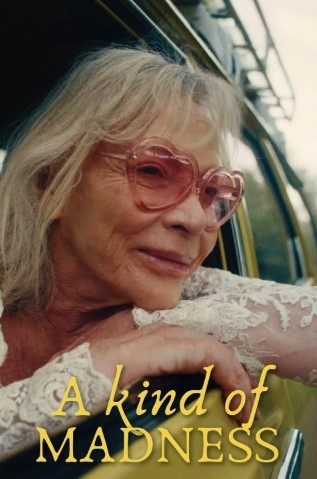
Ever thought of growing old? Will you remain with your memories, or will they slowly disappear? When you think of it more deeply, it is actually a terrifying thought—living all these 80 to 100 years building a lifetime of love, lessons, and laughter, only for those experiences to vanish—or worse, getting stuck at a certain period in time. These were some of the thoughts running through my mind when watching A Kind of Madness.
These were some of the heavy thoughts running through my mind while watching the South African drama, A Kind of Madness. I can confidently say that one of the things that makes a movie truly wonderful is its ability to get you thinking beyond what you see on screen. A great film forces you to reflect on your own life and triggers raw, deep emotions. A Kind of Madness does all of these.
The Plot and The Magic of the Camera; Directed and written by Christiaan Olwagen, the film takes us on an emotional, chaotic ride. What I loved most was how beautifully disorganized the narrative structure felt. It wasn’t a flaw; it was the perfect artistic portrayal of dementia. Because the movie forces us to live through the main character’s life, we have no choice but to go on that disorienting ride right alongside her.
And yes, the older couple—Sandra Prinsloo and Ian Roberts—did the absolute best work. I love how the camera did the best job of showing how confused she was. For the times she felt young, we saw young(Annerie van der Merwe). For the times someone else was looking at her, we saw old. For the times she stared at her husband, we saw a young version, but the husband always saw the current version of himself.
I just love how disorganised the whole movie was—it was the perfect portrayal of dementia. I was absolutely captivated by how the camera work showed the depth of her confusion. The visual transitions were pure genius, and since we were living her life, we had to go on that ride with her.
The Children: A Missed Connection; One thing I did not connect to was the reasoning of the kids, especially the middle child. Do we hold words said by a person with dementia against her? Like, we know she is sick, so why are you mad? And the reason was “because she forgot me first”… like, what? And one more thing I am curious about is those care homes. If your mom, even in her sick state, tells you that she hates that place, do you chase her around trying to take her back? I mean, she loves your dad, he is your dad—why separate them? At least let her have that little happiness.
It’s like a kid crying for something you know will hurt them. If it’s not life-threatening, you give it to them but watch over them so they don’t get hurt. Simple. Soon or later, that kid will forget about that and focus on something else. So, anyway, the whole children’s storyline did not make sense to me. Their reasons, I could not understand. Maybe someone who has actually cared for a loved one with dementia would see it differently.
An African Perspective: In Africa—yes, I know this is a South African movie, but it looks like a white South African movie, upper class—the dynamic is very different. In traditional Africa, our parents age in their homes, somewhere rural, around a garden with many nieces, distant cousins, aunties who show up out of nowhere, and grandkids running around them. What about in your cultures? I think that contrast is what made the children’s decision to send her away feel so jarring to me. Seeing the clinical, isolated approach to handling an elder in this film felt incredibly foreign to my own culture. This is solely because I had the mindset that this is an African movie.
The Visuals and The Acting. I loved how beautiful the movie was. The landscapes, the transitions between the scenes—the best scenes were the sunflower field scene and the cave scenes, which alternated between the young and old versions. The camera and editing were wonderfully done. And that beach scene when she sees a baby and her young self? You just have to see the movie to understand.
Kudos to the actresses—both the young and old versions. They carried this movie and made you see and feel her confusion, excitement, sadness, happiness, and fear. . Everything the writer wanted to say, the older Sandra Prinsloo and the younger Elna Hart played by Ashley de Lange clearly portrayed them.
But can I give extra flowers to Sandra Prinsloo? She kept me glued. . She really got me thinking about my own old age. Also, to the director and writer—Christiaan Olwagen and Wessel Pretorius.—I hope they are really proud.. I clearly saw everything and more of what they envisioned.. The director for small details, like keeping that wedding dress dirty—small, but I appreciated it. And to the writer in you…I hope one day I write something this beautiful.
Final Verdict: An Absolute Must-Watch
Despite my frustrations with the children’s choices, this film is an absolute watch with visual storytelling and emotional depth. It looks at mortality right in the eyes and doesn’t blink. I absolutely recommend A Kind of Madness. Prepare to be moved, prepare to think, and prepare to reflect on what truly matters when the mind begins to fade.