Before Christianity, before missionaries, before the slave trade—Africans had their own gods. What many today call juju was, and still is, African Traditional Religion. Every community had spiritual leaders. These weren’t just background figures—they were central to society. Consulted before wars, Present in marriage decisions, Involved in major community choices, and even influential in selecting kings. In some cases, the word of a spiritual leader carried more weight than that of a king—and that says a lot if you understand how respected kings are in African culture
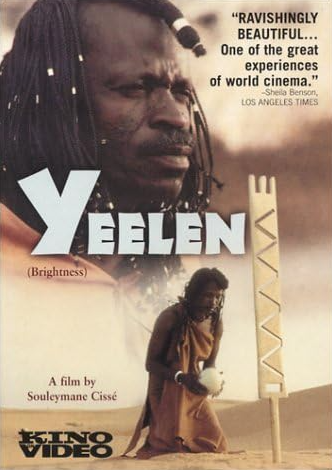
A fight between a father and a son, Yeelen is an award-winning Malian film written, directed, and produced by Souleymane Cissé about Nianankoro (Issiaka Kane), is a young man gifted with supernatural powers, but his own father, Soma (Niamanto Sanogo), wants him dead. Soma, a powerful sorcerer and a member of the feared Komo secret society, has received a vision that his son will one day kill him.. So Nianankoro does what any hunted son would do: he steals sacred fetishes from his father and runs, seeking help from his uncle. The journey takes Nianankoro across different kingdoms and landscapes as he seeks protection and understanding. At its core, it’s not just a physical journey—it’s a spiritual and cultural one.
What makes Yeelen So Unique is how old and new it is at the same time. The more I watch old movies, the more my expectations increase—and the more I am disappointed by modern films. There’s something intentional here that’s missing today The writer, Souleymane Cissé, did a wonderful job portraying a pure African community, untouched by outside influence. You see the land wars between kings, the village meetings, the songs and hymns, the long journeys. You also see the different languages—something many outsiders don’t know: that one African country can have over 50 languages, so at times, even countrymates may not understand each other. Yeelen is filmed in Bambara and Fula, reflecting that rich diversity. African Spirituality in the Film
The portrayal of African religion here is powerful and respectful. Africans were—and still are—deeply spiritual people. There are norms, myths, values, and belief systems that guide everyday life. You really see this through Nianankoro’s journey, especially in his interactions with his uncle and other spiritual figures. This isn’t exaggerated fantasy—it’s rooted in belief systems that still exist in many communities today.
Style & Storytelling: If you’re expecting a thriller, tearjerkers, or lots of tension, then this is not for you. This is a story told by a good storyteller who pays attention to the landscape, the scenery, and the rhythm of life. It is said that the way Africans passed down their history was through storytelling, and Yeelen is written in a way that makes you imagine sitting by the fireplace, enjoying a good story under the stars.
The Acting, What’s interesting is that many of the actors weren’t “professional” in the traditional sense—but they delivered something real. It actually makes you question what a professional actor really is. Sometimes authenticity matters more than polish. Nianankoro (the son) played by Issiaka Kane, Attou (his companion) played by Aoua Sangare, Soma (the father) Niamanto Sanogo, Nianankoro’s Mother played by Soumba Traore. Souleymane Cissé worked intimately with his cast, many of whom couldn’t read. He had to explain every nuance, every line to them personally. As Cissé himself said: “When we started, they were not professionals… With each actor, a new story begins”. . That commitment shows in every frame.
I recommend Yeelen to everyone. It may be a little slow based on today’s standards—there are long sequences of eating, bathing, crafting, and praying——but I think everyone needs to see it. It asks you to sit, observe, and listen. For Africans especially, we should know films like this—and directors like Souleymane Cissé—by heart. They help us understand who we are and where we come from. Yeelen is not a film that holds your hand. It assumes deep familiarity with the peoples, histories, and cultures of Mali and wastes no time on explanatory exposition for Western audiences. . But that’s exactly what makes it so powerful. It is an African story told on African terms, for the world to witness, not to dictate. And if the magic feels far-fetched… just know that stories like these still exist across many African communities.
Have you seen Yeelen? What did you think of Souleymane Cissé’s vision of pre-colonial Africa? Drop your thoughts in the comments below.