I’ve come to a conclusion lately: I love silent movies. The more I watch, the more I respect the directors and actors for being able to show me without telling me—or, I suppose, it’s “tell me without telling me.” There’s an honesty to it that modern films, for all their technology, rarely achieve.
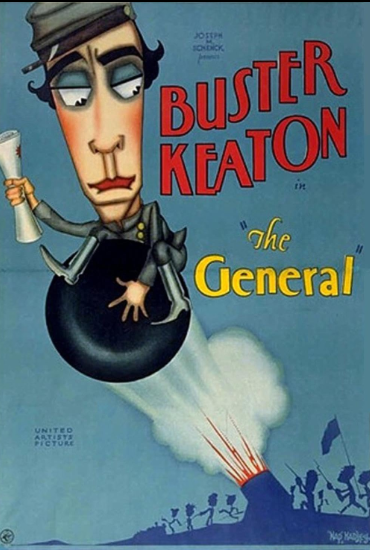
One film that really made this clear to me is The General (1926). I discovered it while searching for 1920s classics, and I’m honestly glad I did. What surprised me even more is that this movie is recognized today as one of the greatest films ever made and is preserved in the U.S. National Film Registry for its cultural and historical importance
The Story That Pulled Me In. The movie is about a train called The General that gets stolen by Union soldiers during the American Civil War. The engineer, Johnnie Gray—played by Buster Keaton—decides to chase it down almost like a one-man army. That alone already sounds like a great action movie plot, but what makes it special is how it’s told. There are no spoken lines, yet you understand everything. The tension, the humor, the determination—it’s all shown through movement, expressions, and perfectly timed action. The film was actually inspired by a real historical event known as The Great Locomotive Chase during the Civil War.
Imagine Filmmaking in 1926. Watching this movie in 2026 is wild when you think about it. This film came out almost 100 years ago. No CGI. No green screens. No modern editing software. And yet the scale is huge. For an old movie—1926 feels impossibly distant here in 2026—I could tell the director invested everything to make it real. From what I learned, the production had thousands of people involved and even hired local residents and members of the Oregon National Guard as extras for the battle scenes.
Real Trains. Real Stunts. Real Risk. Buster Keaton was famous for doing his own stunts, including dangerous scenes on moving trains.
There’s a moment where he’s literally sitting on a moving locomotive clearing the tracks—it looks unbelievable, and it actually was real. And he didn’t just build fake trains—he tracked down and used authentic period locomotives. The scene where a train crashes off a burning bridge? That actually happened. A real locomotive dropped into a real ravine. Keaton did it in one take because he couldn’t afford to rebuild the bridge twice. Imagine doing that in 1926 with only one chance to capture it on camera. That level of commitment is something you don’t see very often anymore.
A Movie That Was Ahead of Its Time. Another interesting thing I discovered: When The General was first released, it didn’t perform very well at the box office, and critics were not impressed at the time. But over the years, people started to recognize how brilliant it actually was. Today, it’s considered one of the greatest comedies and action films ever made. That kind of turnaround is fascinating. It’s like the world needed time to catch up with what Keaton created. Keaton, in his era, was famous for his stubborn commitment to authenticity. People called it hardheadedness, but watching the film now, I see it as pure integrity. He really outdid himself. The stunts—moving between cars, fighting on a moving train, riding the connecting rods—were all performed by Keaton himself. Everything about The General is worthy of the praise it finally receives.
So yes, I recommend The General to anyone who just enjoys a good old watch. It’s perfect for a lazy movie night, for cult movie lovers, and for fans of Charlie Chaplin—Buster Keaton reminded me of him, though Keaton had his own unique genius. If you’ve never seen a silent film, start here. A century later, it still moves like nothing else. Buster Keaton didn’t just make a movie. He built something real, risky, and unforgettable and that’s why almost a century later, it still works.
.