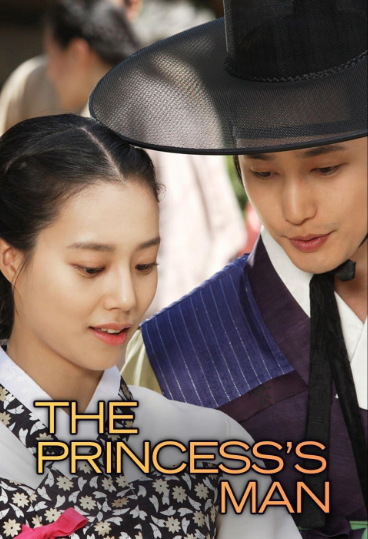
Recently, I’ve felt the drought in K-dramaland and decided to quench my thirst by going back in time. Watching The Princess‘ Man is called nostalgia. Guys, I loved every minute of it. Has the male lead, Park Si-hoo, always been this handsome? And the female lead, Moon Chae-won, has always been on my top 5 K-actresses—so it’s for a reason. I had a smile through the whole 24 episodes. My goodness, the plotline—to be in 2011 is incredible. With the washout plots we have now I sometimes wonder, will our children ever have dramas they look back on and call classics? Will they have that one series that transports them back to a particular period in their lives? Anyway, this time, I made sure to enjoy everything. I replayed scenes as many times as I wanted, paused episodes, daydreamed a little, did some research and then continued watching. No rushing. I wanted to savour it. The Princess‘ Man is considered a K-drama classic for a reason. It was popular when it aired, and what I find even more impressive is that, years later, it still has that something. I genuinely believe that even if it premiered today, it would still attract an audience.
The Story: A Joseon Romeo and Juliet: Spoiler Alert, i have never read/watched Romeo and Juliet so i will consider this the best portrayal of the story. The South Korean historical drama starring Park Si-hoo, Moon Chae-won, Kim Yeong-cheol, Song Jong-ho, Hong Soo-hyun, and Lee Soon-jae. It aired on KBS2 from July 20 to October 6, 2011, for 24 episodes.The drama is a fictionalized romance set against the real political upheaval of the Joseon era. Grand Prince Suyang (Kim Yeong-cheol) is a power-hungry prince who will stop at nothing to take the throne. He tries to build an alliance with Kim Jong-seo (Lee Soon-jae), his brother’s trusted official, by proposing a marriage between his eldest daughter, Lee Se-ryung (Moon Chae-won), and Kim Jong-seo’s younger son, Kim Seung-yoo (Park Si-hoo). Se-ryung is curious about her prospective husband, so she swaps places with her cousin, Princess Gyeonghye, to catch a glimpse of him. Her first impression? He’s an arrogant womanizer. But when Seung-yoo saves her from a horse-riding accident, something shifts.
Their romance is doomed from the start. Kim Jong-seo rejects Suyang’s alliance because he knows the prince’s ambitions, and instead pledges loyalty to the King. Suyang stages a bloody coup, murdering Seung-yoo’s father and brother. Seung-yoo barely survives, and when he learns that the girl he loves is the daughter of the man who destroyed his family, his world shatters. What follows is a story of revenge, survival, and a love that refuses to die—even when everything in the world is trying to kill it.
Why I Loved It: The Villain Actually Won: One thing I want to thank the writer for is that the bad guy won. Like, yes, he actually became king. I love that they made him terrifyingly powerful, and he did not miraculously change. You have to watch the drama to understand what I’m talking about. Kim Yeong-cheol plays Grand Prince Suyang (later King Sejo) as a man who is a good father and a good husband, but also a ruthless enemy. The way he portrayed that duality—a man who genuinely loves his daughter but will still destroy anyone who stands in his way—was masterful. I love that the leads were actually “weak” compared to their opponents. It made me look forward to how they would win when everything was working against them. And I loved that the princess was “weak” in a way that even though she was a princess, this is a society run by men—so she held no actual power other than the title. You will understand when you watch it why the words “won” and “weak” are in quotes.
In fact, the way I interpret the ending is that the leads get their chance at happiness partly because their powerful enemy allows them to leave. Think about that! He doesn’t necessarily lose. He doesn’t suddenly become a good man. He gets the crown he wanted, and his pride remains intact. The villain’s victory is not just a plot twist; it changes how you understand the entire story. Normally, we expect the bad guy to lose and the good people to win. It is the familiar formula. But this drama plays with that expectation, and I loved it.
The Fallen Princess: A Story Within a Story: The one character that stood out the most in this drama was the fallen princess, Princess Gyeonghye, played by Hong Soo-hyun. It was a story within a story. Character growth. Someone you root for. A princess whose whole life is falling apart, but she holds on to her pride and still holds her head high as a princess should. Her strength was not necessarily in having political power or being able to defeat her enemies. It was in holding on to herself when almost everything else was being taken away. Her love story was heartbreaking. Hong Soo-hyun took a character who could have been a spoiled side character and turned her into someone you ache for. Sometimes, a supporting character comes along and quietly steals a part of your heart. Princess Gyeong-hye was that character for me.
Her story also reminded me that being born into privilege does not necessarily mean you have control over your own life. A title can give you status without giving you freedom.
Scene Stealers: Moon Chae-won as Lee Se-ryung—her eyes do a lot of acting. When she’s sad, it shows in her eyes. When happy, her eyes sparkle. Even when determined, you can clearly tell. She delivered so much emotion and completely drew me into the plight of her character. Well this is not surprising, I already know her capability reason as to why I dearly love her.
Park Si-hoo as Kim Seung-yoo—I loved him. He goes from a carefree nobleman’s son to a man with nothing to live for, and the trajectory is fascinating to watch. And yes, that smile. I remember how happy I was the first time he smiled at Se-ryung—me and her were both dazzled.
But let me give special flowers to Kim Young-cheol, who played Grand Prince Suyang. He portrayed such a complex character. He could make you believe he was a good man, particularly in his role as a father and husband, while also showing just how ruthless he could be as an enemy. That contrast was fascinating. I loved that, even towards the end, he remained a good father in his own way. He watched from afar, and there was still that attachment to his daughter. Yet his pride could not allow him to accept that he had been wrong. I appreciate actors who understand the complexity of their characters. It is one thing to play a villain who is simply evil; it is another to portray someone who can be loving in one relationship and absolutely terrifying in another. Kim Young-cheol delivered that distinction beautifully.
The Theme Song and the Details: The opening theme, “Vola” by Lee Ji-yong, is still one of my favorites. And I have to give flowers to the writer, Jo Jung-joo, and the directors, Kim Jung-min and Park Hyun-suk. The small details—the way the camera lingers, the way the political intrigue builds—all of it made this drama feel like more than just a romance.
Final Thoughts: Sometimes, Just Walk Away: There is so much to take away from this drama, and I think that is what makes it worth revisiting. I especially want to give the writer, Jo Jung-joo, and the writing team their flowers. Sometimes, love does not change the world. Sometimes, being in love does not mean you can defeat every obstacle or make everyone understand your choices.
And sometimes, the bravest thing you can do is be selfish and choose your own life. You do not always have to win the battle. Sometimes, you just need to walk away, leave everything behind and find somewhere you can finally live in peace. Maybe that is where your happily ever after is waiting. I loved The Princess’ Man. It reminded me why I fell in love with historical K-dramas in the first place. The storytelling, the characters, the political conflict, the romance and, most importantly, the courage to tell a story that does not follow the usual formula.
You have to rewatch it. How many times have I said this? But seriously, you have to.