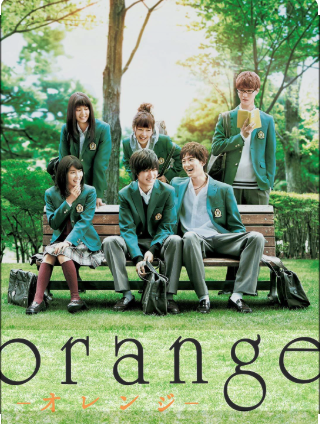
On the surface, it may seem simple—high school romance, right? But it’s so much more than that. Orange is about regret. Mental health. Suicide. Second chances. Friendships. The impact of our choices. Selfless love. This is a rare full package for emotional movie watchers.
The story follows a high school girl named Naho Takamiya (played by Tao Tsuchiya) who receives a letter from her future self—26-year-old Naho, writing from ten years ahead . The letter warns her about things that will happen in the future and tells her to make different choices to prevent regrets . The biggest thing the letter talks about is a new transfer student named Kakeru Naruse (played by Kento Yamazaki). Naho learns that something tragic will happen to him in the future. So she and her friends—including Hiroto Suwa (Ryō Ryūsei), who secretly loves her—try to change events so they can save Kakeru and protect their friendship .
Why This Movie Hit Different, its Mental health is something people hide. The thing about mental health is how people hide behind bright smiles. Sometimes, even when someone is loved, you never fully know what they fight at night—those moments when they’re alone. Japan, as a country that has a high suicide rate, has writers and directors who approach this topic authentically, with experiences many of us may never know. I read somewhere that 1 in 5 Japanese people has experienced suicide personally, through family or friends. So a special ovation to Ichigo Takano—the original manga writer—and Arisa Kaneko—the screenwriter—because I felt exactly what they wanted me to feel. The Friendship That Made Me Believe, The friendships in this movie—Naho, Kakeru, Hiroto, and the rest of their group—they were a bunch who laughed and cried together. It’s probably why they regretted so much, because they missed all the clues even when they were present. I wonder what was in Hiroto’s letters—the second lead. Telling your younger self to let the girl go, even if you have her in the future (in the original timeline, Naho actually ends up with Hiroto), that must have taken so much emotional scars and his own regrets . The fact that he received his own letter and chose to help Naho save Kakeru, knowing it meant giving her up? That’s selfless love right there.
The Actors and Adaptation, A special kudos to all the actors. I was able to connect to them, empathize. I loved how they had each other’s backs, and the actors made it believable. Adapting an anime must be difficult, because we already know how each character acts. Tao Tsuchiya (土屋太鳳) as Naho — she captured the insecurity, the determination, and the quiet strength perfectly, Kento Yamazaki (山崎賢人) as Kakeru— he made me feel every moment of pain behind that bright smile, Ryō Ryūsei (龍星涼) as Hiroto — the second lead whose quiet sacrifice broke my heart
Adapting an anime and manga must be difficult because fans already know how each character acts. But Kōjirō Hashimoto, the director, and Arisa Kaneko, the screenwriter? I’m definitely checking out more of their work. They have gained a new fan.
Yes, I recommend it to people who want a tearjerker. You want something to tingle your feelings. Or just want something on mental health awareness. Or you just want a sad movie to watch. Orange may seem simple, but it’s the impact it leaves after you finish watching it. That’s what makes it unforgettable. Have you watched Orange? What emotional movies would you recommend to me? Let me know in the comments.